Honoring the Legacy of My Father, Varinteká
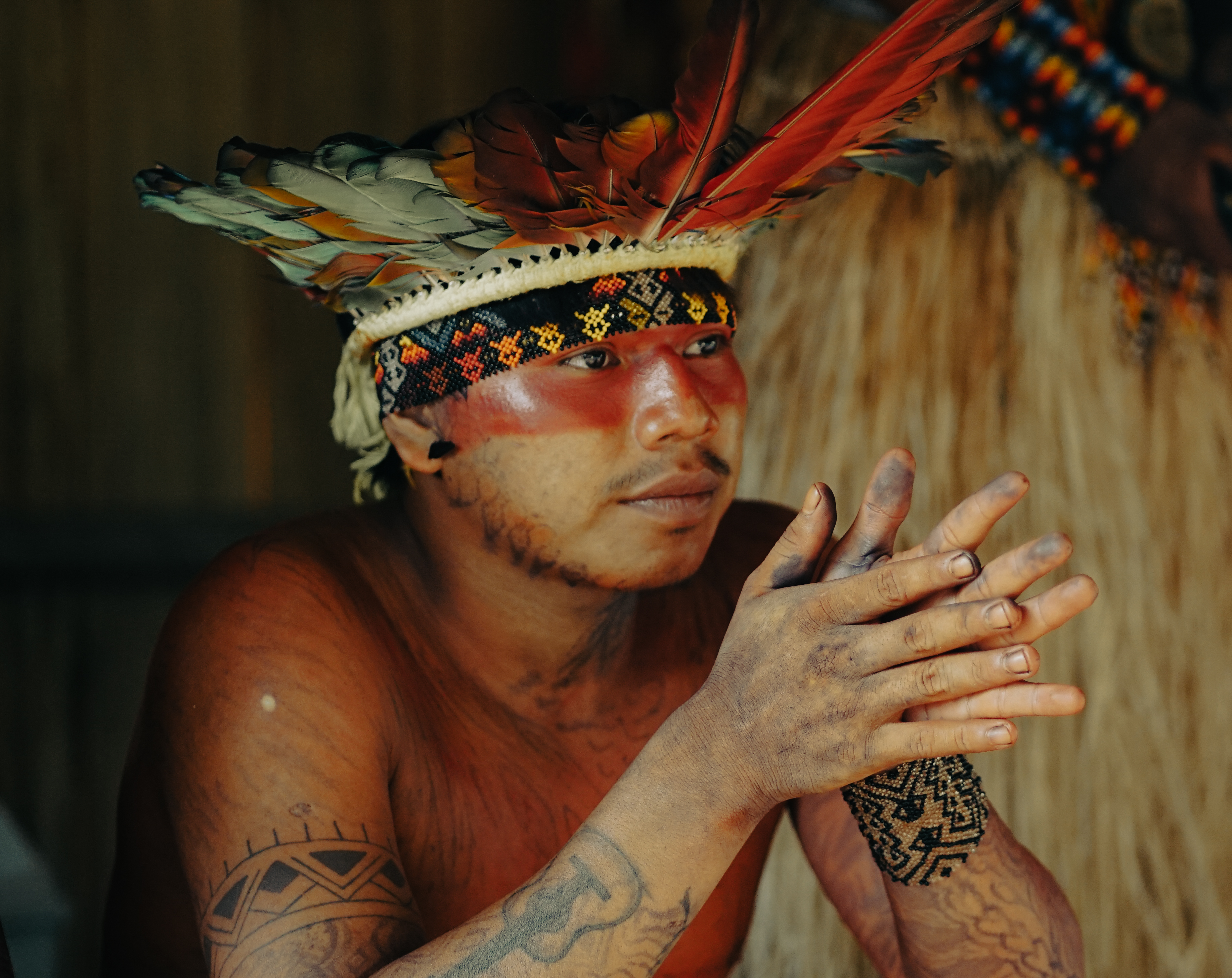
Let me tell you a story. It’s the story of my father, Varinteká, a man whose spirit shone like the first ray of light that touches the Earth at dawn.
When I was a child, he would wake me before sunrise — always at three in the morning — his soft voice breaking through the silence of the forest. “Wake up, my son,” he would whisper. “It’s time to listen.” In the soft glow of the fire, his voice would rise, weaving stories not only of his own life, but of our beginnings — of the river’s song, the whispering forest, and the spirits who walk with our people.
He told me he was born at the headwaters of the Gregório River, son of Vare-Peu, Vare-Naua, and Anu-Satanaua. His father, my grandfather, was a pajé — a healer, a man of wisdom.
When the BR-13004 highway began carving its way through our land, my grandfather heard that the company was looking for workers. For many families, it was a rare chance to earn simple things that had become precious — salt, soap, clothing. So he joined other pajés and leaders — Pajé Ormã, Pajé Maní, and Cacique Heruá — to work on the road that would soon slice through the heart of the forest, forever changing the silence of our home.
My father was still a small child when they arrived together in Rio Campinas. He grew up there, between two worlds — the ancient songs of his people and the new sounds of the modern world creeping closer.
At the age of just 4, his mother Anu began to teach him the sacred songs of the Noke Koî. She explained to him that each song was alive — a breath of the forest, a whisper from the ancestors. From that moment, he knew his heart would follow the path of those songs forever.

Guided by his parents and elders, he gathered melodies like seeds scattered by the wind — each one holding a story, a prayer, a lesson. His path also led him to the classroom, where he learned to read, to write, to speak Portuguese — not to abandon his roots, but to weave a bridge between the world of his ancestors and the world beyond the forest.
At fifteen years old, he became a teacher — one of the first Indigenous educators of our people. He taught our children history, mathematics, and biology, but what he loved most was teaching them who they really were. He showed them that knowledge doesn’t live only in books — it lives in the wind, in the rivers, in the songs of our ancestors.
Knowledge doesn’t live only in books — it lives in the wind, in the rivers, in the songs of our ancestors.
Over time, he became a leader in Indigenous education, helping to create a school curriculum that honored both the wisdom of the Noke Koî and knowledge of the outside world. He believed that our children could walk in both worlds — strong in their roots, open in their hearts.
My father was not only a teacher- he was also a visionary. He saw how technology could help our people share their voice. He brought cameras and recorders into the villages, teaching others to document our songs, our prayers, our ceremonies — so that the world could see that the Noke Koî are alive, strong, and full of spirit.
At thirty, he went to the Federal University of Goiás, and was one of the first Noke Koî tribe members to study there. He learned to write our stories in a language that others could understand. When he finally returned, the children gathered around him. Through his words and songs, he taught them to keep learning, to keep singing, and to carry the strength of their ancestors into the future.
Through his words and songs, he taught them to keep learning, to keep singing, and to carry the strength of their ancestors into the future.
His journey took him beyond our home in the jungle, across Brazil and into Peru. He spoke to many groups and people about the importance of the forest, the Earth, and the spirit that unites all life. He told them about our way of learning, our culture, and the deep connection we share with the land. In every place he went, his words carried the voice and message of the Noke Koî tribe.
In time, he became the elected chief of Vari Teka Village, working alongside other great leaders including Chief Capejú, Chief Vinhô, Chief Xerê, and Chief Neí. Together they worked to defend our land, our health, our culture, and our right to live in harmony with the forest.
When I remember my father now, I see him smiling — humble, gentle, yet strong as the roots of the samaúma tree. He carried within him a warrior’s heart and a peaceful spirit. Even after his passing, his light continues to guide us.
The seeds he planted have grown into a forest of new leaders — teachers, healers, agroforestry workers, chiefs, and spiritual guides — all carrying his vision forward.
His name, Varinteká, means “the first ray of light to illuminate our lives and the Earth.” And that is what he was — a light that rose from the forest to touch the world, carrying the wisdom of the ancestors into the future. We named the Vari Teka village in memory of his legacy.

Today, as his son, I walk the path he opened. I continue his fight — for our land, our education, our health, our culture, and our spirituality. His story is not just my father’s story. It is the story of the Noke Koî — a people who remember, who resist, and who continue to shine their light into the world.
Varinteká’s legacy matters because it is a powerful example of a bridge between very different worlds — between the wisdom of the ancestors and the forest and the realities of the modern world. He showed that it is possible to embrace education, technology, and progress without losing the soul of one’s people. Through his life, he proved that tradition and modernity can walk side by side, each strengthening the other.
His legacy also carries the spiritual memory of the Noke Koî. The songs he learned, the teachings he shared, and the values he lived by are not just memories — they are living forces that continue to guide the community today. Every child who studies, every young leader who rises, every song that is sung in the village carries a part of his light.
Every child who studies, every young leader who rises, every song that is sung in the village carries a part of his light.
Varinteká’s work in education and leadership helped create opportunities for future generations. He opened doors that had never been opened before — not only to schools and universities, but also to self-confidence, cultural pride, and the freedom to speak as Noke Koî in any space.
Most importantly, his legacy reminds us that identity is strength. In a world that often tries to silence Indigenous voices, Varinteká’s life stands as a message: that the wisdom of the forest, the songs of the ancestors, and the spirit of the people are not relics of the past, but the foundation of the future.
Vari Vari, Pina Varinawa Chief, Vari Teka Village


Comments